
You are the IP..
A practical guide to telling your own story — for VFX, animation & game design professionals
Open Frame Coaching
Accredited Career & Leadership Coach · Former Global Head of Compositing, DNEG · 25 years in VFX
www.openframecoaching.com ↗DAX — Digital Arts Xchange
The Digital Creative Talent Specialists
www.wearedax.io ↗jobs.wearedax.io ↗
Bringing ‘Main Character’ Energy to Your Career
Your Hero’s JourneyLet’s Meet Our Hero — You.
Every great story has a hero who starts somewhere, faces real obstacles, and grows through the challenge. Your career is no different. Stepping into the role of main character changes everything — not a passenger, not a supporting act, but the person who decides where the story goes next.
If you were describing yourself as the hero of your own story, what words would you use?
Not who you think you should be — who you actually are.
Where are you currently on your journey?
Your current role, your energy, what feels exciting — and what feels stuck.
Where would you like to get to?
How would you like to feel day-to-day? What kind of work, lifestyle or impact are you seeking?
What strengths & skills will you use to overcome obstacles?
Skills, values, relationships and ways of thinking — what’s in your hero’s toolkit?
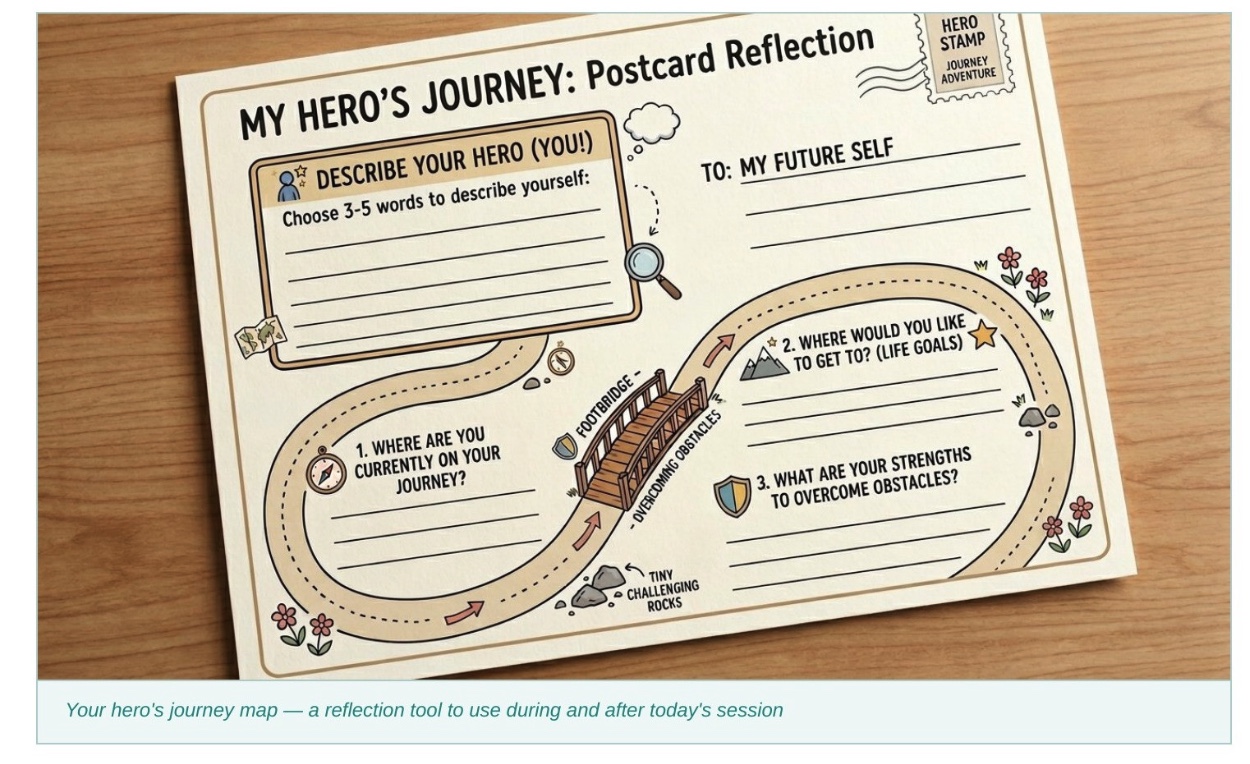
Heroes aren’t defined by where they start — they’re defined by the fact that they kept going. Having a clear goal and knowing what steps you’ll take puts you firmly in the driving seat of your career progression.
Would you like help defining your career path and next steps?
Book a Free Chat with Debra →Your Production Package (Personal Brand)
Foundation“Your personal brand isn’t something you create. It already exists. It’s simply what people say about you when you leave the room.”
Your brand is already being built across three arenas — the question is whether you’re shaping it consciously.
Example: “I help VFX studios create CG environments audiences remember, through optimising lighting and FX that makes the impossible feel real.”
Online
Portfolio · LinkedIn · ArtStation · Social — what you share signals who you are
On Project
Reliability · Creative generosity · Professionalism under pressure — small moments compound into reputation
In Community
Events · Mentoring · Industry conversations — be curious and generous, not the loudest voice in the room
Online Presence
Arena 1 of 3Your online presence is your first impression — and often your only one. It’s not just what you show, it’s what you say about what you show.
Portfolio & Showreel
- Show the story behind every shot — the brief, the challenge, the decision
- Lead with your best work, close with your second best
- Label your exact contribution clearly — studios see the same shots on multiple reels
- Keep reels to 60–90 seconds — recruiters decide in the first 30
- No password barriers — one click, open, done
- Rewrite your headline using your Brand Formula — not just your job title
- 72% of recruiters search here — a complete profile means a 71% higher interview chance
- Summary: 47–57 words that communicate your value clearly
- Link your portfolio directly from your profile
- Engage — share, comment, contribute to conversations that matter to you
Platforms
- ArtStation — where studios actively scout for VFX & games talent
- Vimeo — best compression and presentation for reels
- Behance — ideal for process work and case studies
- Cara — artist-led, AI-scraping protected, fast-growing community
- Personal site — your brand anchor and full creative control
On Set (Showing up in person)
Arenas 2 & 3Your technical and creative skills are the baseline — the price of entry. In a competitive hiring situation, what you bring beyond the technical gets you the role.
Problem Solving
- Come with problems and proposed solutions — not just blockers
- Adapt to brief changes with curiosity, not resistance
- Spot pipeline inefficiencies — flag and improve them proactively
- Your problem-solving story is worth more in an interview than three showreel credits
Team Ethic & Sharing Credit
- Name the people who contributed — even when you don’t have to
- Amplify your colleagues’ work, not just your own
- Make junior team members feel seen and credited
- Sharing credit doesn’t diminish your contribution — it builds your reputation as a leader
Constructive Feedback Culture
- Receiving: Treat feedback as data — not a verdict on your worth
- “Thank you” and actually using the note is a rare professional superpower
- Giving: Specific, actionable, future-focused
- Lead with intent — what is the work trying to achieve, before critiquing how it’s done
Your Screen Test (The STAR +C Method)
Interview FrameworkMost people answer interview questions as a list of things that happened. STAR+C turns those into a story with a point. The +C — Creative Insight — is what makes the answer stick.
Set the scene briefly. What project, what stage, what was the environment?
What was your specific role or challenge within the project?
What did you actually do? Name the decision, approach, and creative problem you solved.
What happened? Quantify where you can — “went through in two reviews” beats “it went well”.
What did you learn? What would you do differently? What does this reveal about how you think?
Preparing Your Story Bank
5–7 Strong QuestionsYou can’t prepare for every question — but 5–7 well-rehearsed stories will cover most of what comes up. The more specific and grounded your examples, the more they land.
Start Here — Your Origin Story
“Tell me about yourself.” Answer with Origin → Craft → Vision. 45 seconds. Practise it like a voiceover script.
This is the question every interview starts with. It’s also the one most people are least prepared for. Nail this one first.“Tell me about a time you solved a problem no one else had tackled yet.”
What was missing? What did you bring that cracked it?
“Describe a time the brief changed at short notice. How did you respond?”
Show curiosity over resistance. What did you learn about yourself?
“Tell me about a time you received difficult feedback and what you did with it.”
Frame it as data, not criticism. The best answers show real change — not just acceptance.
“Give me an example of a time you helped someone else succeed.”
What did you give? How did it affect the team or project outcome?
“Tell me about a time you disagreed with a creative direction. How did you handle it?”
Show respect for the process while demonstrating a genuine point of view.
“Describe a high-pressure moment on a production. What did you do?”
Studios hire people who stay calm and keep morale intact when it counts.
Interviewers don’t only remember competent answers. They remember vivid stories that made them feel something. That’s your medium — and you already know how to use it.